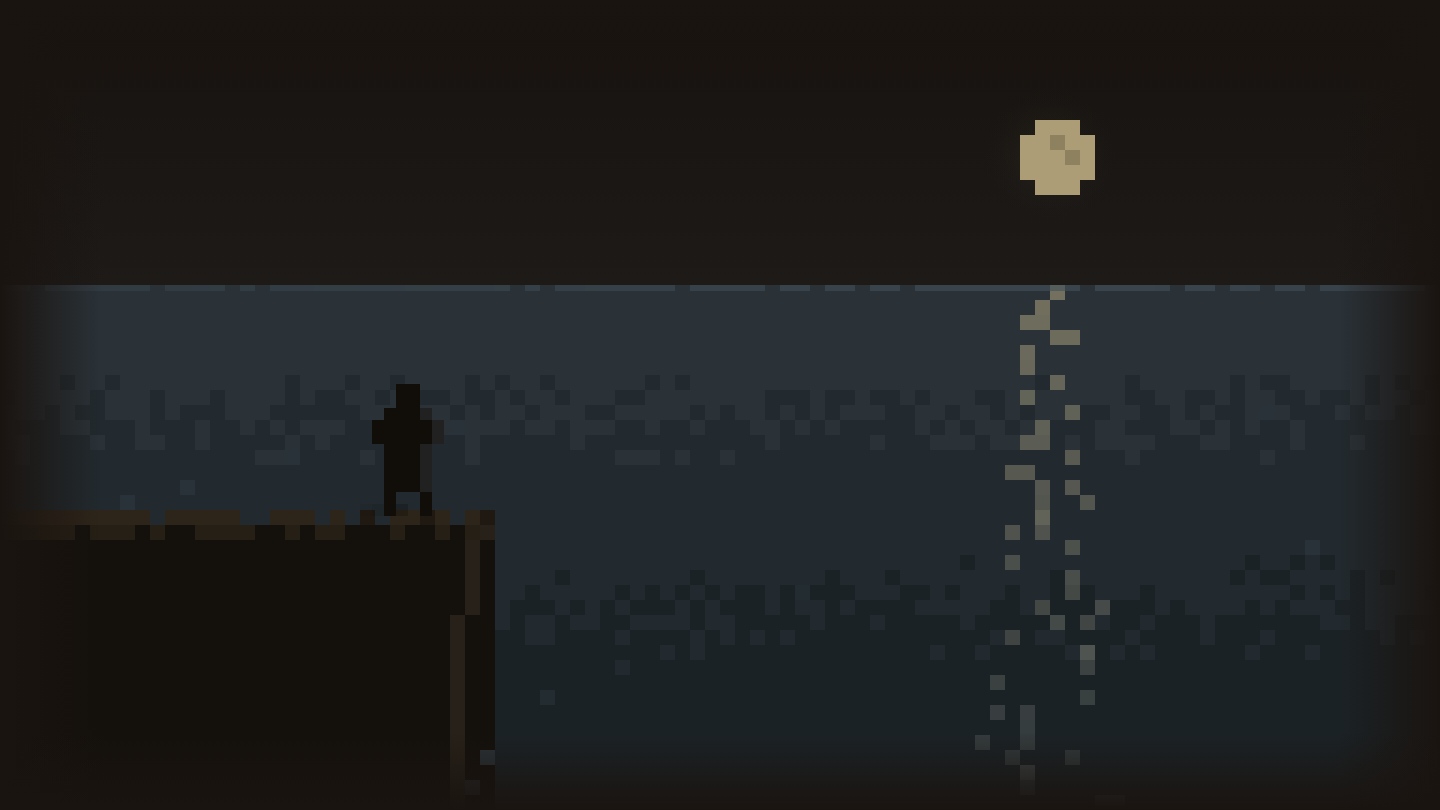
There was a man named Kael.
The first time I knew him, he was difficult to love. He complained when it rained. He was too quick to anger and too proud to apologize. People learned to give him space.
He loved a woman named Mira. One night, a man came for her.
I do not remember anymore whether Kael had another choice. Perhaps that is something memory changed to make living with it easier. I only remember the moment before Kael struck — the fear in him, and the certainty that whatever happened next would happen to him before it happened to her.
Kael killed the man.
Nobody understood why. Some called him a murderer. Others simply stopped trusting him. Mira stayed for a while, but afterward there was always something between them that had not been there before. Perhaps she never understood him either. Perhaps even Kael himself never did understand.
I did.
That did not make what he had done right. It only meant I had seen the part of him nobody else had seen.
The same man who could become terrifying when something he loved was threatened was afraid of deep water. He carried an old axe long after we found better weapons. He lost two fingers somewhere beneath a black sky while the road disappeared into the storm. Most of all, I remember thinking that I knew him.
That life was an One life. One road. One version of what happened.. Eventually, it ended. Kael became a A person the player remembers across different lives and worlds., and the world moved on.
Worlds rarely understand when they end. There is no final moment when everyone looks toward the sky and realizes their history is finished. Roads simply stop being walked. Names disappear from conversation. Houses become ruins, ruins become stone, stone becomes soil. Eventually, even the people who remembered are gone.
But I remembered Kael.
Much later, there was another world. Cold country, mountains in the north, a settlement built where the trees became too stubborn to grow. Beyond it stretched the The unknown part of the current world..
And there he was. Kael.
Ten fingers. No Mira. No old axe. He had never seen the sea. Someone in town said his father had been a carpenter. A merchant complained that Kael still owed him three silver. Children knew his name; one of them ran toward him without fear and grabbed his hand.
Someone remembered Kael as a boy, crouched beside a patch of dead earth, holding up the first flower anyone had seen grow there. Someone knew what food he hated. Someone else knew exactly how he laughed.
Nobody looked at Kael strangely. Nobody asked where he had come from. Why would they? He had always been there.
That's just Kael.
I wanted to tell him. I wanted to say: you once stood in rain beside someone you loved. You once killed a man because, for one terrible moment, protecting her mattered more to you than anything that came after. You once carried an axe because throwing it away felt like betraying the dead. You once looked over the side of a bridge and stepped backward before anyone noticed. You survived things this version of you has never seen.
But what would any of that mean to him? Those things had not happened. Not here. Perhaps they never would. To Kael, I would have been describing another man. To me, I was remembering him.
Kael had not crossed into this world. No door opened, no ghost took possession of someone else's body, no traveler appeared from another age. This Kael belonged here completely. He had a childhood here. People remembered his mistakes. Someone remembered the flower. Someone knew the sound of his footsteps outside their door.
His body belonged to this world. His history belonged to this world. And still — I knew him.
Perhaps that is why some people feel strangely familiar before we know them. Why some places feel like home before they have earned the word. Why a city we visit once can make us ache when we leave, why the rhythm of an unfamiliar language can sometimes feel easier than the language we grew up speaking, and why someone can spend years surrounded by everything they were told should fit them and still quietly think: I am supposed to be somewhere else.
There are ordinary explanations for all of this. There should be. Temperament, culture, memory, chance — the endless small accidents that make one person fit one place better than another. The Long Road does not ask you to believe otherwise. It only asks a question.
What if a life is larger than the place where it happens?
Kael eventually reached the coast. For the first time in this life, he saw the ocean. The road ended above a cliff, and below him was nothing but dark water. He stopped. Someone walking beside him asked what was wrong. Kael laughed. "Nothing." And perhaps that was true. Perhaps he was only looking at the sea.
But for one moment — he stepped backward.
There is a A familiar place where different roads seem to come close. at the end of many roads. Or perhaps there are many Camps. Nobody is wrong. Nobody has the whole of it.
Travelers tell stories about the fires. Some say that if you stare into one long enough, you can see another night inside it — another road, another circle of faces. Nobody knows whether the fire is showing something far away, something long gone, or something that has not happened yet.
Scholars say tired travelers see patterns in firelight. Priests say the Road remembers. Old travelers usually refuse to answer. They only add another piece of wood.
From the Camp there is a place called The place from which you see and influence the current world.. From there, distance becomes small. Roads become lines, mountains become shapes, years of danger become a single decision. You see places no traveler at the fire could see. You see the Frontier pushing farther into darkness, and people walking toward things that may kill them. You choose who goes farther. You choose who returns. Sometimes you choose wrong.
The people living in that world do not see pieces moving across a board. They see Kael leaving town. They see him tighten the straps on his pack and disappear into the mountains. For them, days pass — perhaps months. From The Watch, you see the shape of his road.
I do not know how many times I have known Kael. Sometimes he is brave. Sometimes he becomes cruel. Sometimes he dies before doing anything worth remembering. Sometimes he has children — and sometimes people I once knew as his descendants appear in worlds where they lived centuries before him. It should be impossible. It should contradict itself. And still, when I see him, I know. That's Kael.
Maybe that is what a Legacy really is. Not immortality. Not resurrection. Not a body dragged forever through history. A Legacy is the part that remains recognizable when everything else is allowed to change.
One day, Kael went farther into the mountains than he should have. The danger ahead was almost gone. He could still turn back — I knew that. But one more push might open the pass. One more fight might save the settlement behind him. So I sent him farther.
Kael died there.
For the people of that world, there was nothing metaphysical about his death. A man died in the mountains. People mourned him. Someone told the child who used to grab his hand. The merchant stopped asking for his three silver. His name remained in stories for a while — then less often, then perhaps not at all. The world continued.
I returned to the Camp. Kael was gone. But the things I remembered were not. The storm. Mira. The axe. The missing fingers. The man he killed. The flower he picked from soil where nothing should have grown. The ocean he had never seen until another life. The mountain where he died. No one inside either world could collect those memories into a single biography. I could.
The worlds do not remember each other. Kael does not remember every Kael. The people around the fires do not know how many fires I can see.
I remember.
And perhaps that is all I am. Not their king. Not their god. Not the person walking the road. Just the thing that notices when someone returns — the thing that recognizes a person even when history insists they should be unfamiliar, the thing that carries the meaning of one life into another. The continuity between roads.
Another Adventure begins. Someone joins the road. Someone surprises me. Someone survives much longer than they should, and a name starts meaning something. Perhaps that person becomes a Legacy.
Somewhere else, another world is already waiting. Its people will believe their history is the only history there has ever been — and they will be right. Its mountains will be real. Its wars will be real. Its children will grow up knowing nothing about any life that came before them. They will be right too. Eventually its Frontier will close, the world will disappear from The Watch, the Camp will feel strangely familiar, and a new road will open. And maybe, somewhere on it, I will recognize someone.
Perhaps you know the feeling. Standing somewhere far from the place you were born and realizing, with uncomfortable certainty: this fits me better. Meeting someone and finding familiarity before history has had time to create it. Missing a place you barely know. Wanting a life nobody around you understands.
There does not have to be anything supernatural about it. Maybe there isn't. But stories exist partly because some feelings are larger than their explanations. The Long Road is built around one of them — the idea that perhaps we are not defined only by the single place, single history, single version of ourselves that happened to occur. That perhaps something recognizable remains. Not enough to remember. Just enough to feel.
Another world will come. Another Kael may never appear. Perhaps someone entirely different will stand somewhere for the first time and feel strangely at home — looking at a landscape they were not born beside, hearing a language they were not raised speaking, sitting beside people they should still consider strangers, feeling something they cannot quite defend with logic. Not proof of another world. Not evidence that the universe made a mistake. Just that old human feeling:
This place feels like home before I even knew it existed.
And for a while, nothing else needs to be understood.